
Moles / Flat Warts / Seborrheic Keratosis / Skin Tags, etc.Syringoma and Sebaceous Hyperplasia: Precise Treatment Considering Recurrence

Syringoma and Sebaceous Hyperplasia: Precise Treatment Considering Recurrence
Customized treatment combining Potenza and Erbium (CO2) laser * VAT separate
Options
Treatment Details





Sebaceous Hyperplasia: An Approach to Reducing Recurrence
If only the visible part is removed, the root cause of the lesion may remain.
Sebaceous hyperplasia refers to lesions that appear when the sebaceous gland tissue within the dermis layer of the skin abnormally enlarges.
However, many procedures often involve only removing the superficial lesions with a laser.
While this approach may seem to show short-term improvement,
there is a possibility of recurrence if the fundamental cause of the sebaceous gland tissue is not addressed.
Our medical institution takes a different approach.
We aim to reduce the possibility of recurrence by treating the surface of the lesion and selectively managing its internal, fundamental cause.
We go beyond simply addressing visible symptoms,
and pursue a treatment approach that improves both the cause and the symptoms.
To achieve this, we utilize a combination of two types of equipment.
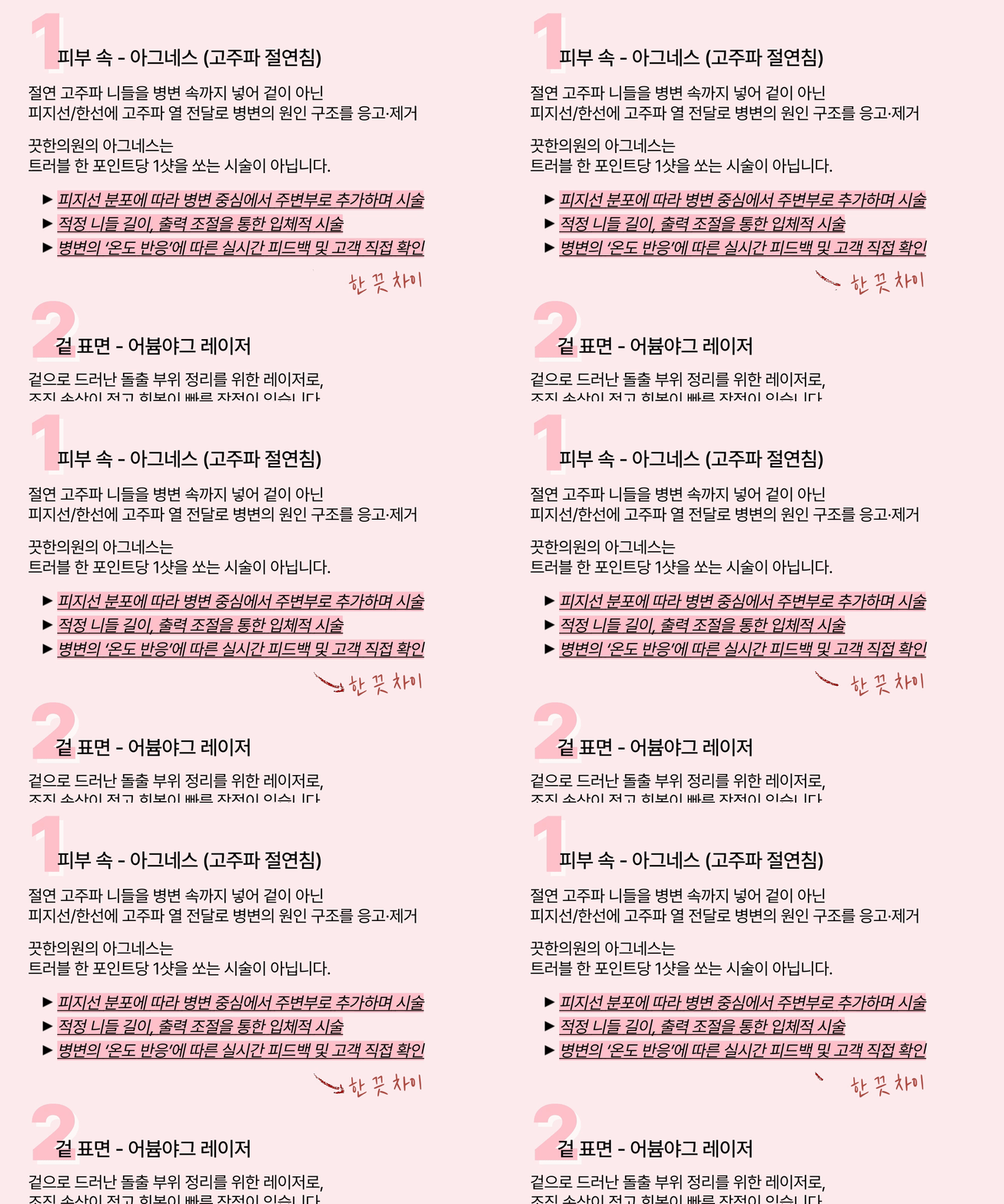
1. Secret Agnes RF (Insulated Radiofrequency 1-pin Needle)
By directly delivering high-frequency energy to the area where sebaceous gland tissue is located,
it helps to selectively coagulate the sebaceous glands.
By using an insulated micro-needle, it minimizes damage to the epidermis or surrounding areas,
targeting only the sebaceous gland tissue.
This plays a crucial role in managing the fundamental cause of sebaceous hyperplasia.
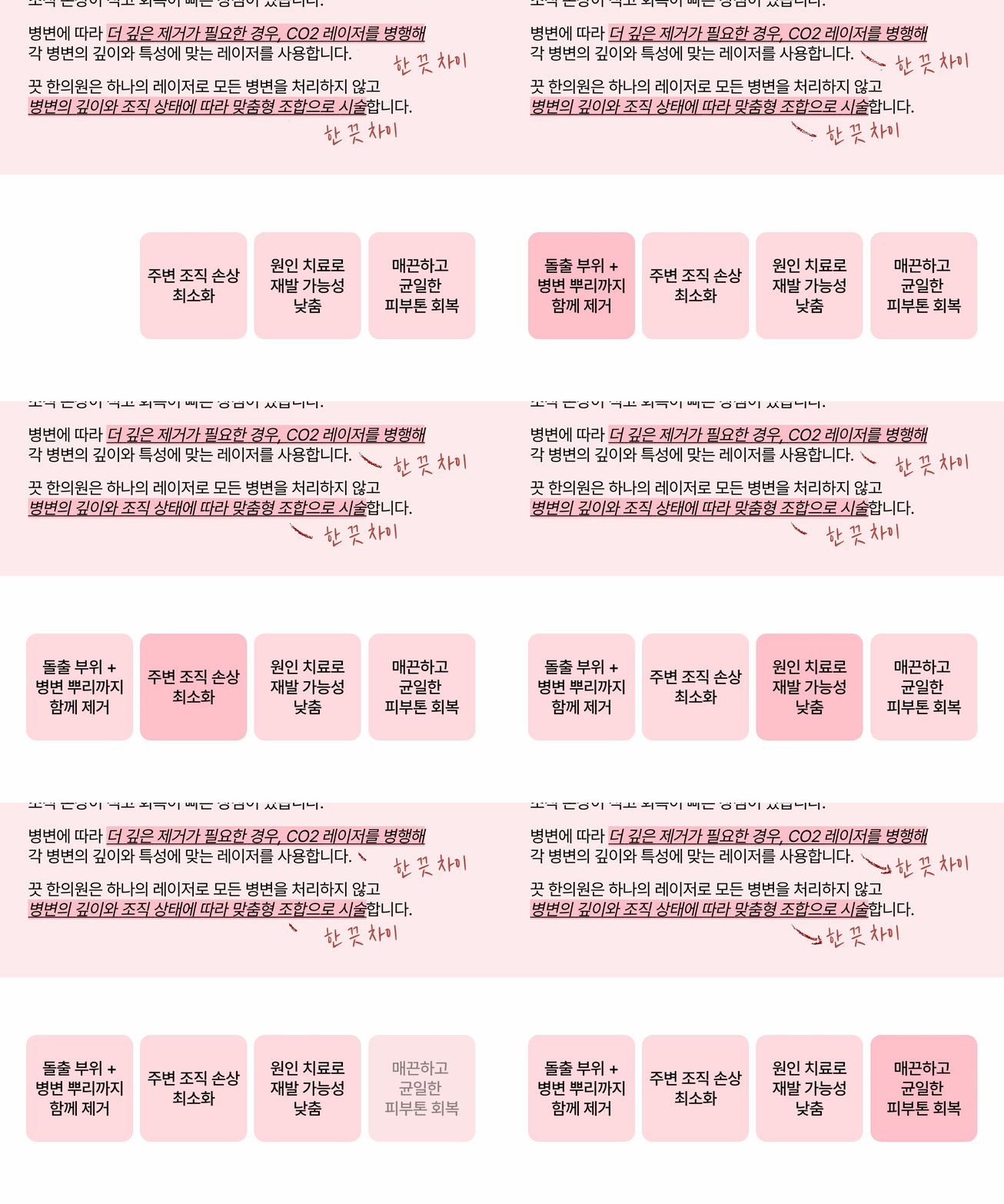
2. Erbium YAG Laser (Er:YAG)
Compared to CO2 lasers, it allows for more precise control over the depth of the lesion during ablation,
and can be used to delicately remove raised lesions.
This laser causes less damage to surrounding tissues, resulting in a lighter recovery burden and helping to reduce the possibility of scarring.
In some cases, it can also be used in conjunction with a CO2 laser to manage lesions located at a relatively deeper level.
This approach differs from traditional simple removal procedures.
Ablation using only a CO2 laser primarily removes only the superficial part of the lesion, leaving the fundamental cause of the sebaceous gland intact, which can lead to recurrence.
Our combined procedure focuses on selectively managing sebaceous gland tissue and treating superficial lesions to reduce the possibility of recurrence.
Key Characteristics of Sebaceous Hyperplasia
Sebaceous Hyperplasia
Procedures that only remove the surface may have limitations.
Managing both the surface and the internal causes of the lesion can help reduce the likelihood of recurrence.
Are you experiencing any of the following symptoms?
Small, round bumps mainly observed on the forehead, cheeks, or around the nose
Lesions with a central depression, resembling a navel
Appears similar to a common pimple but is difficult to extract
Does not disappear over time or gradually increases in number
These symptoms may not be simple skin blemishes,
and could indicate *sebaceous hyperplasia*, a condition where sebaceous glands are abnormally enlarged. It is recommended to consult with a specialist for an accurate diagnosis.
Procedure Steps
첫 상담부터 마무리까지의 실제 진행 순서를 확인하세요.
- 01
Before the procedure, a detailed consultation with a medical professional is conducted to understand your skin condition and the characteristics of the lesion, and a personalized treatment plan is established. This is followed by cleansing and the application of anesthetic cream. Then, the Agnes procedure precisely destroys the sebaceous glands, and subsequently, an Erbium (CO2) laser delicately removes the surface of the lesion. Finally, the procedure concludes with soothing and regenerative care.
Ideal For
One Fine Difference makes real results.
- KKEUT POINT 01
Recommended for those concerned about skin irregularities due to sebaceous gland hyperplasia or syringoma, or those who feel that management is necessary for recurrent lesions.
Q&A
고객님들이 가장 많이 물어보시는 내용을 모았습니다.
Is it necessary to combine Agnes treatment?

For syringoma and sebaceous hyperplasia, it is important to effectively control the sebaceous glands that cause the lesions. Agnes is designed to selectively target specific sebaceous glands, and when combined with existing treatments, it can help reduce the possibility of lesion recurrence.
What is the recovery period after the procedure?
For proper regeneration of the treated area, it is recommended to consistently apply and manage with regenerative tape (e.g., Duoderm, Duoderm Gel) for about 2 weeks.
How much pain is there during the procedure?
Individual pain sensitivity may vary. To minimize pain, we apply an anesthetic cream before proceeding with the procedure.
Cautions
Results = Treatment × Aftercare. Please follow the notes below.
After the procedure, avoid sun exposure and consistently manage the treated area using regenerative cream and regenerative tape. Redness, swelling, and pigmentation may temporarily appear depending on the individual. If discomfort persists, please contact the clinic.